- agentic-ai
- llm-applications
The real work begins after the agent demo: What it takes to put agentic AI into production

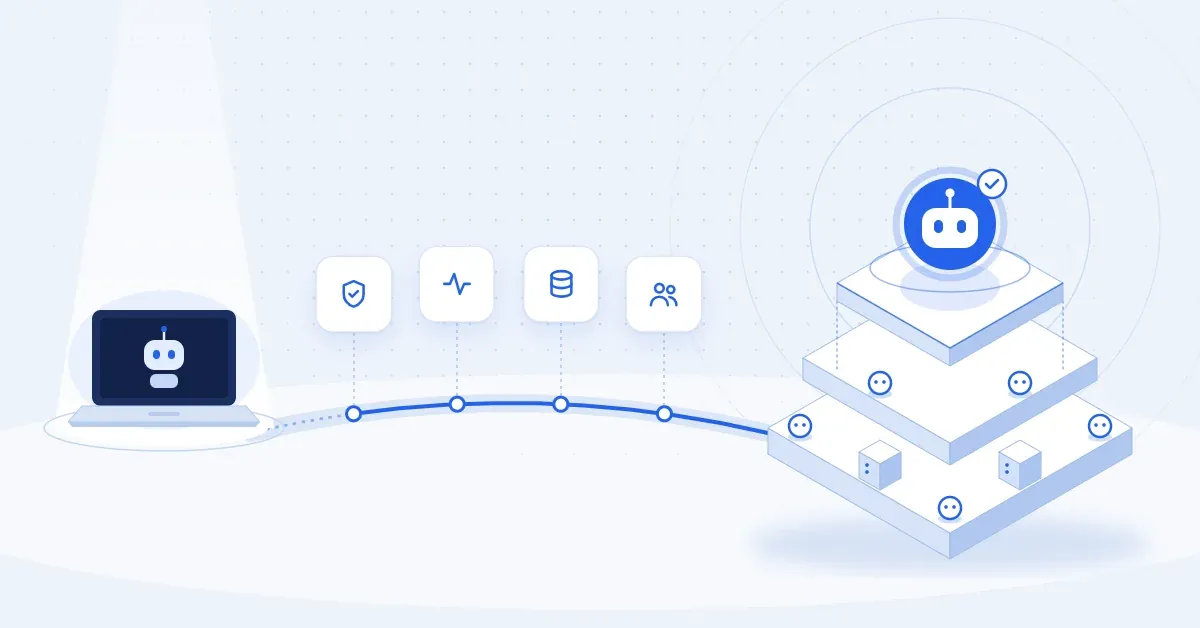
A demonstration of an AI agent can show how it retrieves information, works with connected applications, and completes a series of tasks with limited human involvement. It gives a team a practical sense of what the technology can do and where it might fit into a business process.
But demonstrating that an agent can complete a task is one thing and making sure it can do so reliably within an actual business environment is another. Real-world operations involve changing data, different user requests, existing systems, and situations where an agent may need to stop or seek human approval.
This is where the engineering work begins – moving Agentic AI from pilot to production requires more than a capable model. The solution needs access to the right information, reliable connections to business systems, and clearly defined boundaries around the actions it can take.
What an agent demo actually establishes
A proof of concept typically tests a focused task under defined conditions.
The team may provide a limited dataset, connect a few tools, and demonstrate how an agent interprets a request and completes a sequence of actions. Within those boundaries, the agent may perform well.
Production introduces a different set of conditions: information may be incomplete or inconsistent, users may give unexpected instructions, and connected applications may return errors or change over time. An agent may also encounter situations where it needs to stop, ask for more information, or pass the task to a person.
Consider an AI agent designed to help employees with internal policy-related requests. A demonstration might show it retrieving the relevant policy, checking the information provided by an employee, and creating a review task for the appropriate team. A production version must also identify the current policy, respect document-level permissions, avoid creating duplicate tasks, and recognize when a request needs human attention.
The agent’s ability to complete the task depends on more than the underlying model; it needs the right information, access to the appropriate tools, and clear boundaries around what it can do.
The engineering work between pilot and production
Several connected areas need attention before an AI agent can support a business workflow reliably.
Data and context
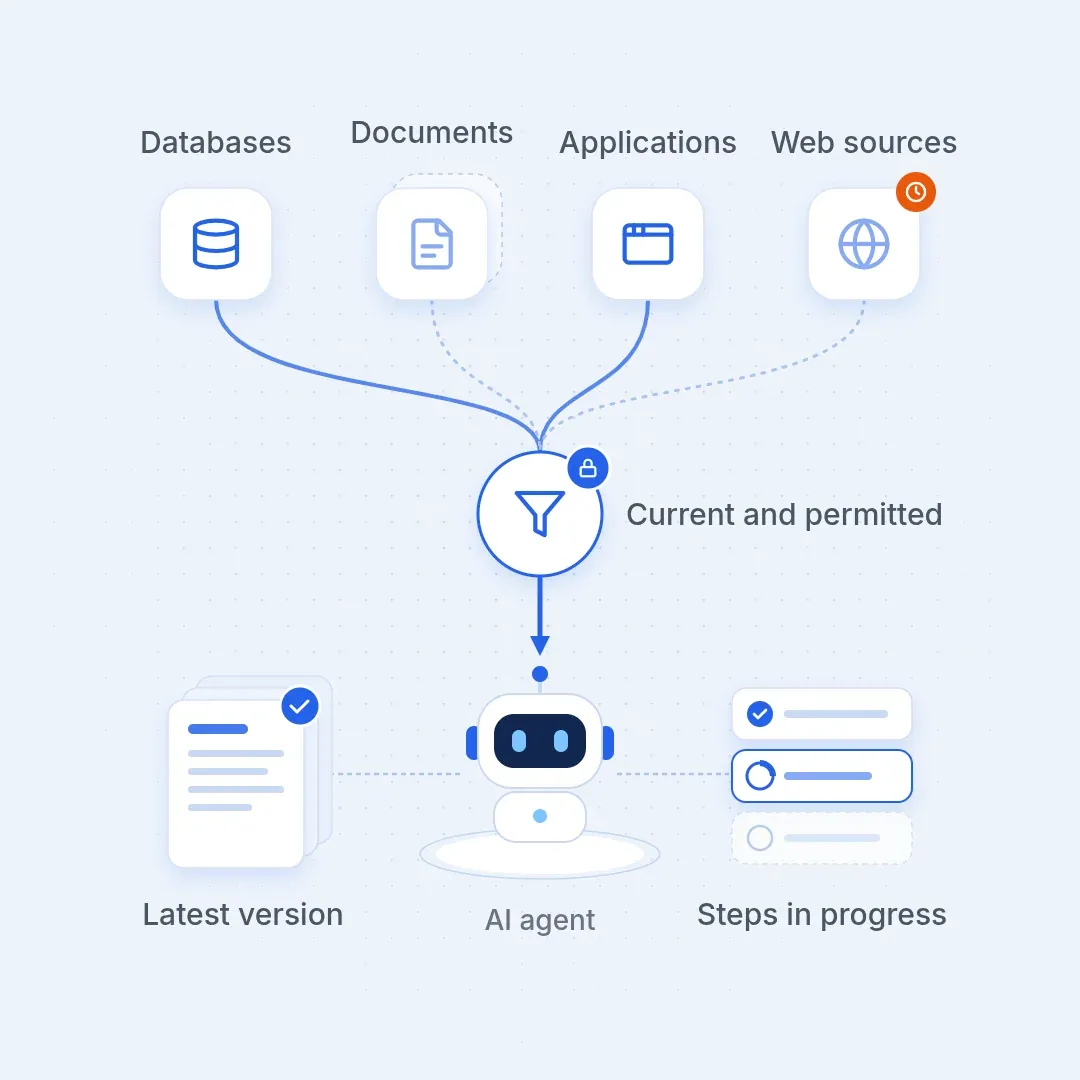
AI agents rely on the information available to them to decide what to do next. Relevant data may be spread across databases, documents, business applications, and external sources. Some information may be outdated, duplicated, or difficult to access consistently.
Teams need to establish which sources are authoritative, how information is retrieved and updated, and what context the agent requires to complete its task. They also need to consider how the agent retains information about work already in progress, particularly when a task involves several steps or interactions.
For an internal policy agent, this means identifying the correct version of each policy, accounting for updates, and ensuring that employees receive only the information they are authorized to access. The agent must also retain the relevant context as it moves from retrieving information to checking a request and creating a review task.
The quality of an agent’s decisions depends in part on the information it receives, and data readiness should therefore be assessed against the actual workflow the agent is expected to handle.
Integration with business workflows
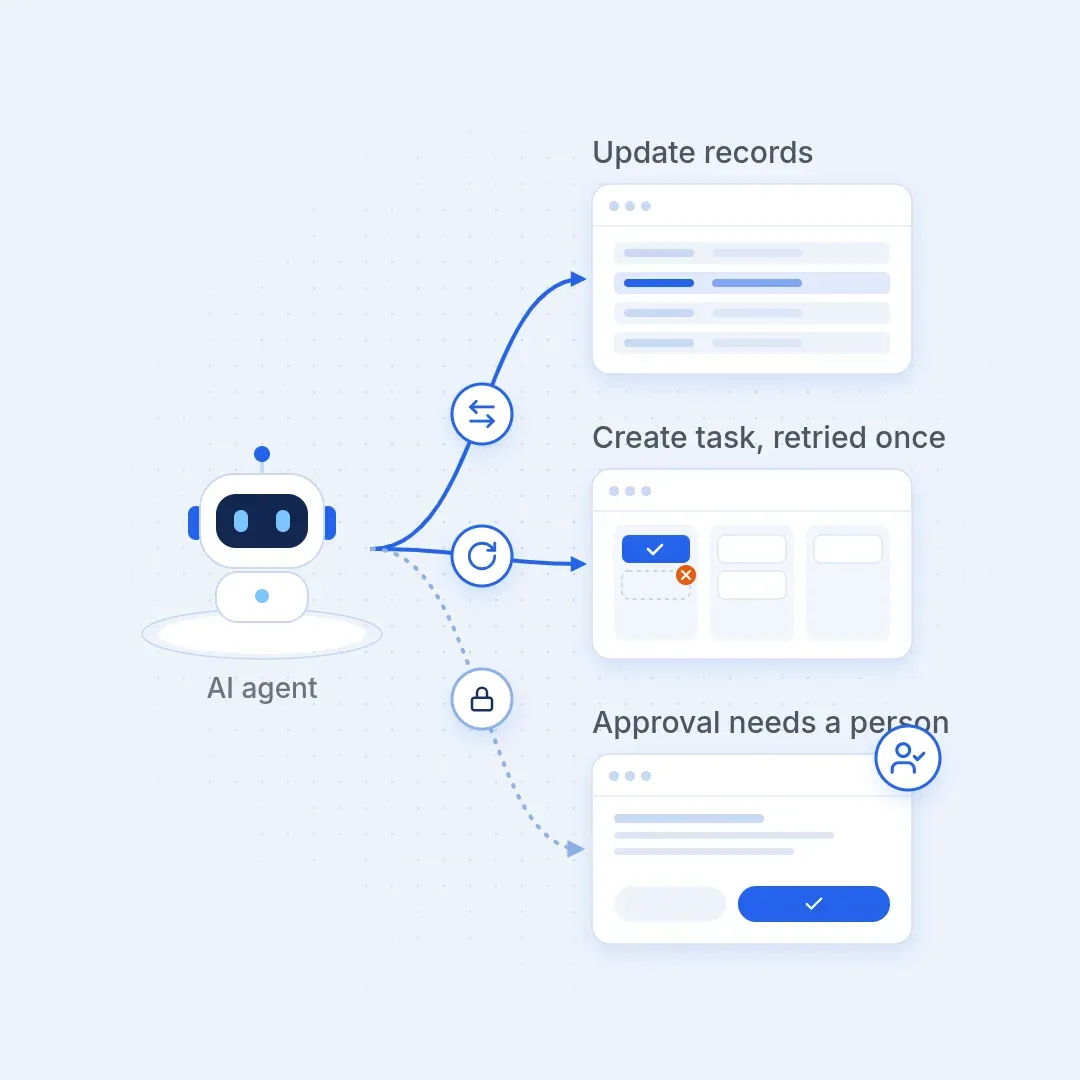
An AI agent can only complete a business task when it can interact with the systems involved in that task. This may require connecting to business applications through APIs, retrieving records, updating information, creating tasks, or routing requests to other teams.
These integrations need to be designed around the actions the agent is allowed to perform. For example, an agent that identifies a potential issue in a business record may be permitted to create a review task but not approve the record or change important information without human authorization.
Teams also need to account for what happens when a connected application is unavailable, a request fails, or the information returned by a system is incomplete. A retry, for instance, should not create the same task twice simply because the first request timed out.
These requirements influence the architecture of the solution, the way different applications communicate, and the reliability of the complete workflow. They become particularly important when an agent needs to work across several systems to complete a single task.
Evaluation, reliability, and control
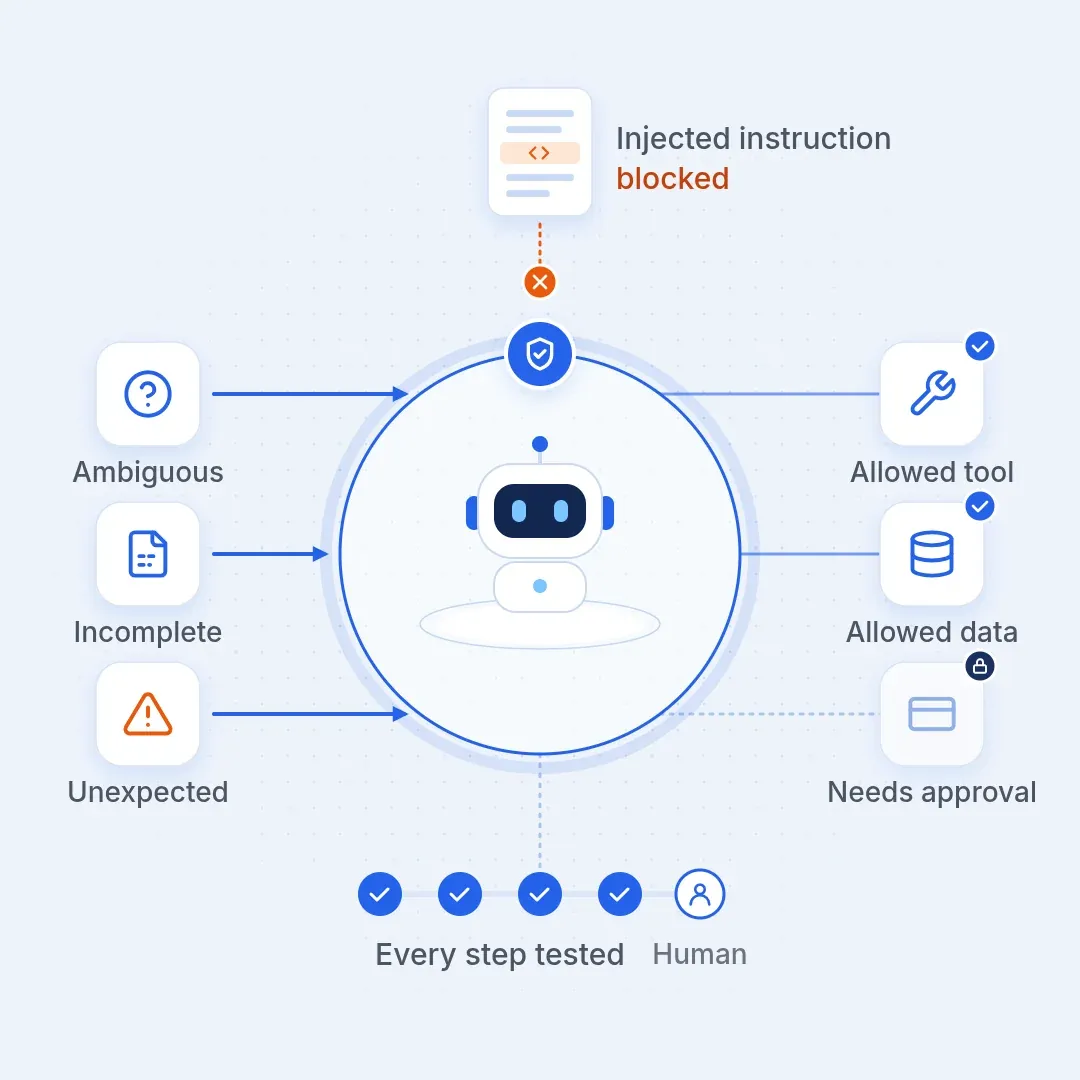
A model that produces convincing responses in a demonstration may still make poor decisions when an agent encounters unfamiliar inputs or unexpected situations. Testing therefore needs to cover the agent’s actions and the sequence of steps it takes, not just the quality of its final response.
Teams should test representative scenarios: ambiguous requests, missing information, unexpected tool responses, and cases needing human help. They should also check that the agent picks the right tools, uses them correctly, and avoids redundant actions.
Security and access controls matter because agents act on what they receive. Limit permissions to the tools and data each task needs, and require approval for sensitive or high-impact actions. Instructions in external content must never override the agent’s rules.
The appropriate controls depend on the role and risk of the application. The OWASP Top 10 for Agentic Applications 2026 provides a useful reference for understanding and managing security risks in systems that plan, act, and make decisions across workflows.
Operations after deployment
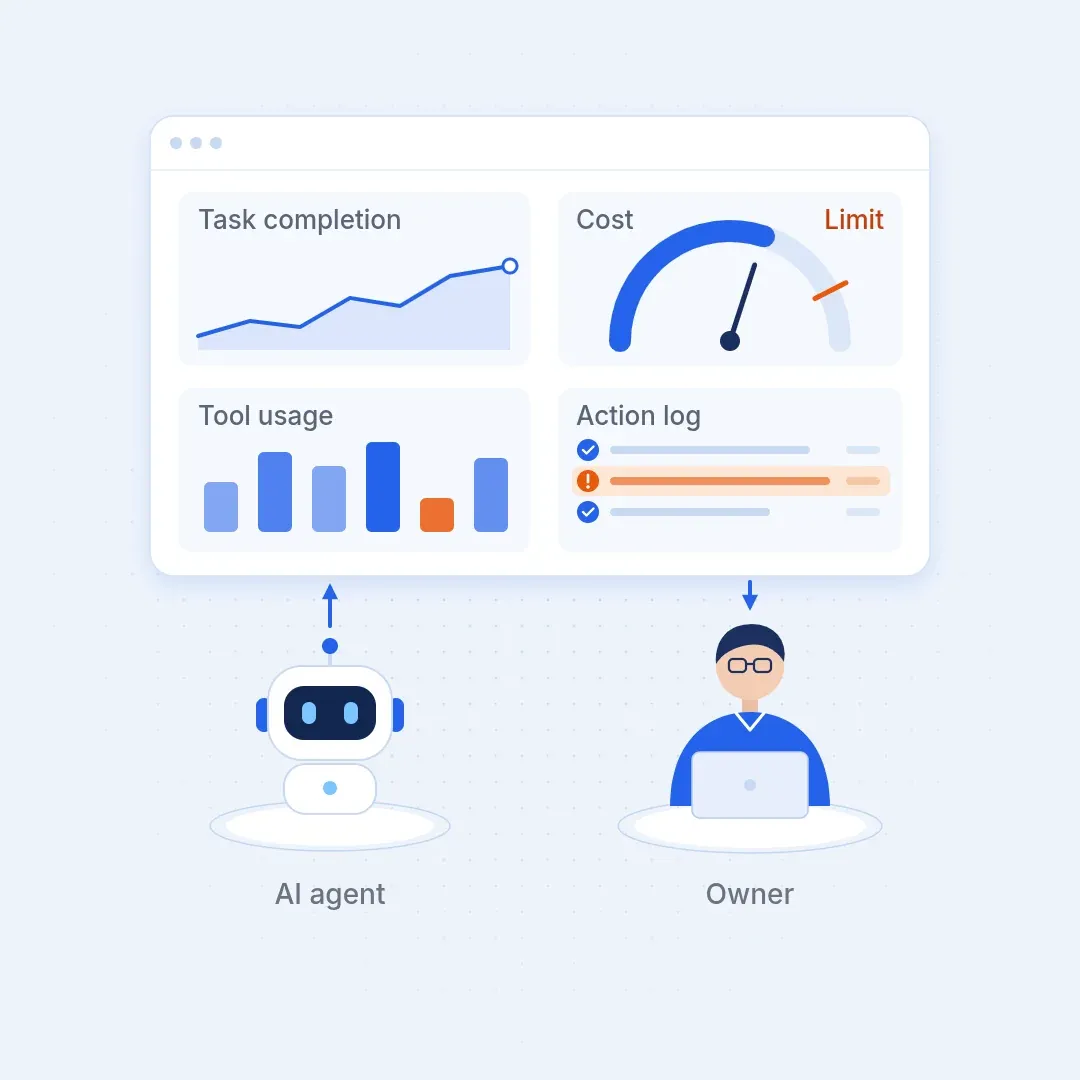
Production readiness extends beyond launch. Data changes, applications evolve, and user behavior can reveal problems that did not appear during development. An agent may also behave differently when it handles a wider range of tasks or interacts with more systems.
Teams need to monitor both the agent’s performance and its actions. This may include task completion, tool usage, response times, failed actions, costs, and human interventions. Logging actions and systems accessed also aids troubleshooting.
Clear ownership is equally important. Someone must review the agent’s performance, investigate failures, update connected components, and decide when to restrict or roll back a change. Teams should also cap the steps, time, and cost a task can use.
These operating practices need to be in place before the agent becomes a dependency in daily business operations. They provide a way to identify problems and keep the solution reliable as its environment changes.
Have a question about taking Agentic AI from pilot to production? Let's discuss the engineering considerations for your enterprise.
Talk to our experts
Define success before scaling
An AI agent completing a task does not automatically mean that the business process has improved. It may successfully retrieve information and create a review task while employees still spend considerable time checking its work or correcting mistakes.
Before expanding a pilot, teams should define what the agent is expected to improve and how that improvement will be assessed. Useful questions include:
- Which business task or process should the agent handle?
- How much time and manual effort does the current process require?
- What level of accuracy and task completion is acceptable?
- Which actions can the agent perform independently, and which require approval?
- How often should a task be escalated to a person?
- What feedback is being collected from end users on the satisfaction of the agent’s responses?
- Who will monitor the agent and take responsibility for ongoing improvements?
- What data are we capturing to identify failure cases and future enhancements?
The measures will depend on the use case. An agent handling internal requests might be assessed on task completion time, the number of requests resolved without manual intervention, and the accuracy of its responses. An agent supporting an operational workflow may need to be evaluated on successful actions, processing time, and the amount of rework required.
Looking at these outcomes gives business leaders a better understanding of whether the agent is improving the process. It also helps teams decide whether the solution is ready to expand or needs further engineering.
Plan for the production environment early
Production requirements do not need to wait until a pilot is complete – teams can test with representative data, examine integration requirements, define the agent’s permissions, and establish evaluation criteria while the initial experiment is still being developed.
This does not mean building a complete production system before the use case has been validated, but it means understanding what the agent will need to access, which actions it may perform, and where human oversight will be required. Starting with a limited set of tools and permissions, testing in a controlled environment, and expanding access as the agent demonstrates reliable performance can make the transition more manageable.
At Infocusp, we approach Agentic AI implementation as an engineering challenge that extends beyond model development. Our expertise across AI, data, cloud, software, and quality engineering helps organizations connect AI agents to enterprise systems, establish the necessary controls, and build solutions that can operate reliably in real business environments.
Moving Agentic AI from pilot to production is both an engineering and a business exercise. The model matters, but so do the information it relies on, the tools it can access, the actions it is permitted to take, and the teams responsible for its performance over time.
Explore Infocusp's AI solutions to learn more about our approach to AI implementation.